
Outdoor Saunas in Cold Climates: What Actually Works (and What Fails)

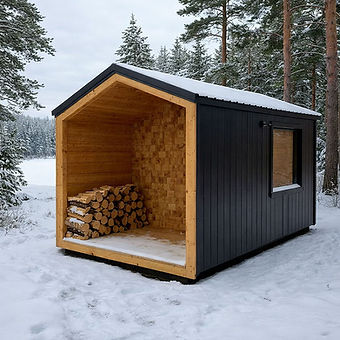
Outdoor saunas behave very differently in cold climates than they do in mild or controlled environments. Snow, wind, freezing temperatures, and rapid freeze-thaw cycles expose design weaknesses quickly. Many outdoor saunas that look impressive on a product page struggle to perform once winter arrives.
This guide explains what actually matters when building or choosing an outdoor sauna for cold climates, which common designs fail, and what to expect when temperatures drop well below freezing.
Learn more about designing outdoor saunas for cold climates →
Why Cold Climates Expose Bad Sauna Design
In warm regions, almost any enclosed wooden structure with a heater can feel like a sauna. In cold climates, heat loss becomes unavoidable unless the sauna is designed correctly.
Cold weather magnifies poor insulation choices, undersized heaters, air leaks and uncontrolled airflow, roof and ceiling design mistakes, and moisture problems that often go unnoticed in summer.
A winter-ready sauna is not defined by appearance or materials alone. It is defined by how well it holds heat, manages airflow, and produces consistent steam under demanding conditions.
Why Most Outdoor Saunas Fail in Winter
Many outdoor saunas struggle in cold climates for predictable reasons.
Thin wall construction is one of the most common issues. Walls designed for mild weather lose heat too quickly once temperatures drop. Thin panel systems may warm up initially, but they struggle to maintain temperature and steam quality.
Undersized heaters are another frequent failure point. Heaters selected based on indoor or warm-climate recommendations often cannot overcome heat loss in winter, resulting in long heat-up times and unstable temperatures.
Poor roof and ceiling design also plays a major role. Heat rises, and low ceilings, flat roofs without proper insulation, or insufficient snow-load planning lead to uneven heat distribution and uncomfortable bench temperatures.
Uncontrolled air leaks around doors, windows, or poorly sealed panels allow cold air to disrupt airflow patterns, reducing both comfort and efficiency.
Finally, moisture trapping becomes a serious issue in winter. When moisture cannot escape properly, condensation and ice formation occur, leading to long-term material and performance problems.

What Actually Works Below Freezing
Outdoor saunas that perform well in cold climates share several core design principles.
Proper insulation and thermal mass are essential. Insulation must reduce heat loss without trapping moisture, and walls, ceilings, and floors all contribute to overall performance.
Correct heater-to-volume ratio matters more in winter than in any other season. Cold-climate saunas require heaters sized for real-world conditions, not minimum specifications. Additional heater capacity improves heat-up time and steam stability.
Controlled airflow is critical. A sauna should be sealed enough to hold heat, but airflow must be intentional. Proper intake and exhaust placement keeps oxygen fresh while distributing heat evenly throughout the space.
Ceiling height and bench placement significantly affect comfort. Bench height matters more than floor area, and seating should be positioned where heat stratification works in the user’s favor.
Snow-ready roof design ensures longevity and usability. Roofs must handle snow load while preventing ice dams and excessive heat loss. Proper pitch and overhangs make a meaningful difference in winter performance.

Wood-Fired vs Electric Saunas in Cold Weather
Both wood-fired and electric saunas can work well in cold climates, but they behave differently.
Wood-fired saunas produce strong radiant heat and high stone temperatures, which can be advantageous in winter. They are less affected by power outages and often produce superior steam quality, but they require more involvement from the user. We never compromise on quality of our wood-fired stoves and go with the most authentic US brand, valued for its performance since 1930. Starting from 2026 all our outdoor saunas would be offering NIPPA stoves.

Electric saunas offer convenience and consistent control. In cold climates, they must be properly sized and paired with excellent insulation to avoid long heat-up times and temperature instability.
The right choice depends on lifestyle, location, and how the sauna will be used during winter months. Our choice of electric stoves for 2026 is IKI, but we also offer Harvia and HUUM stoves to our customers.

Design Choices That Matter More Than Materials
Material quality is important, but design decisions often have a greater impact on performance.
Door placement affects heat loss during entry. Window size and orientation influence both heat retention and the sauna experience. Vestibules or small transition spaces reduce cold air intrusion. Interior layout determines how heat and steam circulate within the room.
A well-designed sauna built from modest materials often outperforms a poorly designed sauna constructed from premium wood.
What to Expect in Real Winter Conditions
Understanding realistic expectations helps prevent disappointment.
Heat-up times are longer in winter, even in well-designed saunas. More energy or fuel is required to maintain temperature. Steam quality improves once the structure reaches thermal balance. Winter sauna sessions often feel more intense and rewarding due to the contrast between heat and cold.
Cold climates do not make saunas less effective. They make good saunas better and bad saunas obvious.
Who a Cold-Climate Outdoor Sauna Is (and Isn’t) For
A cold-climate outdoor sauna is ideal for those who value performance over appearance, plan to use the sauna year-round, want authentic heat and steam, and are willing to invest in proper design.
It may not be the right choice for those seeking a purely decorative backyard feature or minimal involvement.

Final Thoughts
Outdoor saunas in cold climates require more than attractive design and quality materials. Performance depends on insulation, airflow, heater sizing, and architectural decisions that only become apparent when winter arrives.
When designed correctly, an outdoor sauna becomes more than a seasonal feature. It becomes a reliable, year-round space for heat, recovery, and ritual—even in the coldest months.
Comments